


.png)

.png)

.avif)
You build the work. The marketing should bring you the work. Most contractors in Canada have it the other way around.
You hustle for referrals. You shake hands at the lumberyard. You drop off cards at the local hardware store. When things slow down, you panic, throw money at a Facebook boost, hire some guy from out of country to "do SEO," and three months later you're back to dropping cards at the hardware store.
That's not a marketing problem. That's a missing system.
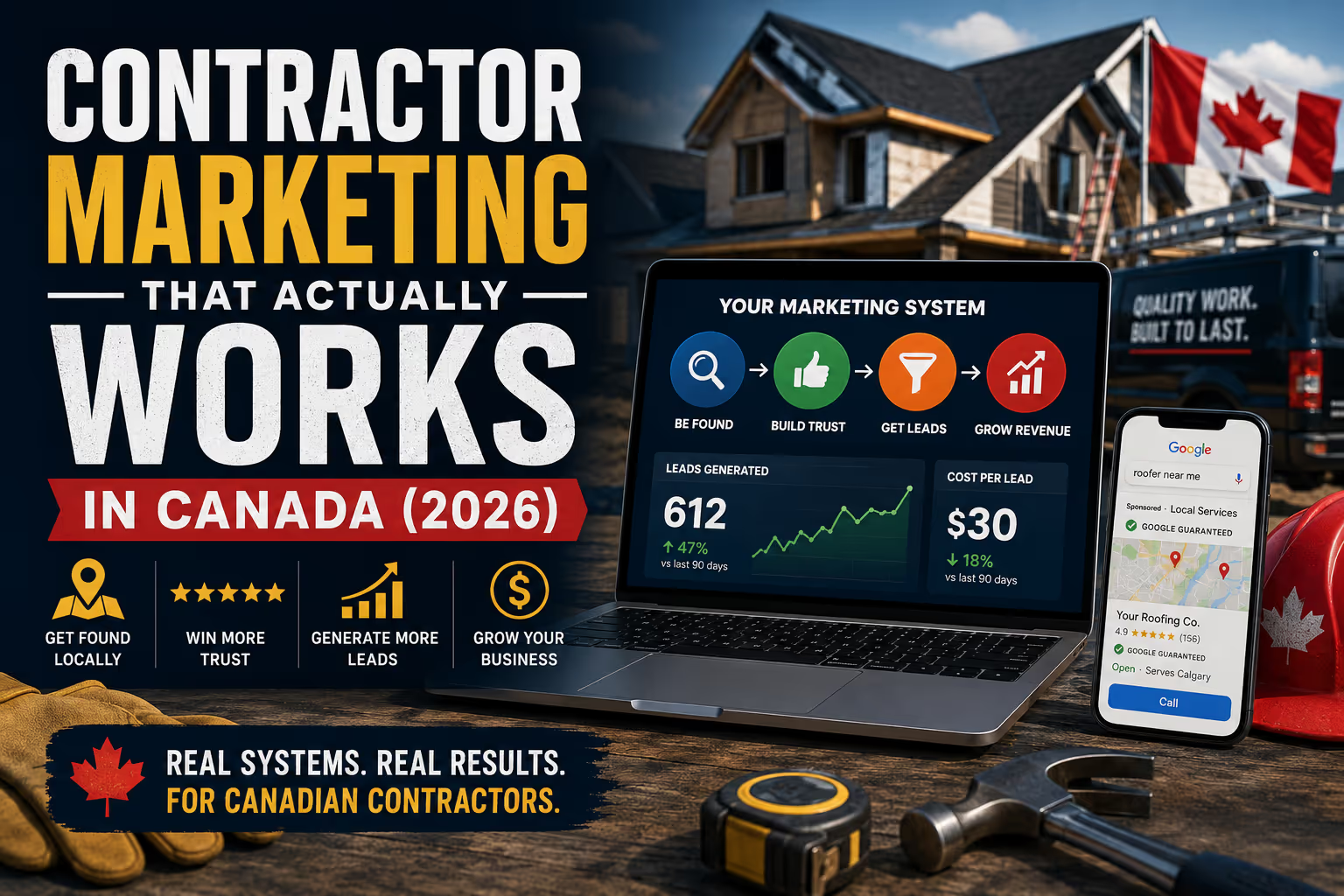
This is the playbook we run for Canadian trades and contractors at NerdySpider. It's the same one we used to build Jake's Welding, an Ontario fabrication shop in Oxford County, from 0 to roughly 600 leads at about $30 per lead. It works because it treats marketing like a trade. Real work, done in the right order, with the right tools, by people who know what they're doing.
No fluff. No "10X your business with our growth hacking funnel." No agency that calls themselves your "growth partner" before they even know which province you're in.
Just what works for Canadian contractors in 2026, in plain English.
1. Why Most Contractor Marketing in Canada Is Broken in 2026
The default playbook for a contractor in this country still looks like this:
- Build a website your nephew made for $300 in 2018
- Buy a HomeStars subscription
- Boost a Facebook post when work slows down
- Hope referrals keep showing up
- Repeat
There are real problems with each of those steps. But the bigger problem is that there's no real system underneath them. Each move is reactive. Each move costs money. None of them stack on top of each other to build something that keeps paying off after the cheque clears.
A few things have changed in 2026 that make this old playbook even riskier.
Google's local search has gotten brutal. The map pack at the top of every "[trade] near me" search now shows three businesses. Three. The fourth-place contractor in your city gets a fraction of the clicks the top three get. If you're not in those three, you're invisible to most people searching for what you do.
Google Local Services Ads (LSAs) have rolled out across more Canadian trade categories. HVAC, plumbing, electrical, roofing, locksmith, garage door, pest control, cleaning, landscaping, general contracting. Contractors who get Google Guaranteed sit above the regular ads and above the map pack. Contractors who don't get pushed further down the page every quarter.
Lead-selling platforms have gotten more expensive and more shared. HomeStars in the GTA now charges $30 to $70 per lead, and most of those leads are sent to three to five contractors at the same time. You're not paying for a lead. You're paying for a chance to win a bidding war.
Skilled-trade demand in Canada is real, but it's concentrated. Customers with real budgets and real projects are searching online before they ever call. They're reading your reviews. They're comparing your website to the next guy's. If your online presence looks like you don't take your business seriously, they assume you don't take their job seriously either.
The contractors winning in 2026 aren't the ones with the loudest ads or the biggest agency retainers. They're the ones who built a real foundation. A fast website that ranks. A Google Business Profile that wins the map pack. A system for collecting reviews. A small ad budget pointed at the right place. Once that foundation is in, every other dollar they spend on marketing works harder.
Let's get into how to build it.
2. The 3 Stages of Contractor Marketing Maturity
Before we talk about tactics, you need to know where you are. Most contractors try tactics that are two stages ahead of where they actually sit, then wonder why they didn't work. Pick your honest answer below.
Stage 1: Referral-dependent
You get most of your work from word of mouth. You have a website but you barely look at it. You're not really sure what your Google Business Profile says. You don't have a system for asking for reviews. Marketing happens when work slows down.
This is most Canadian contractors under about $500k in annual revenue. There's nothing wrong with being here. Referrals are the best leads on earth, and a strong referral pipeline is the goal, not the problem.
The problem is fragility. One bad season, one big customer who slows down, one builder who moves out of town, and your pipeline drops fast. You need a backup channel that works whether or not the phone is ringing.
The right move at Stage 1 is the digital foundation. A clean fast website, a real Google Business Profile, a system for review collection. That's it. Don't run ads. Don't pay for HomeStars. Don't hire a "content creator." Get the foundation in.
Stage 2: Foundation in place, growing
You have a website that loads in under three seconds, mobile-friendly, with real photos and a working contact form. Your Google Business Profile has 25+ reviews. You show up in the map pack for at least one or two searches. Your phone rings from sources other than referrals.
This is where you start spending on demand capture. Google Local Services Ads if you qualify. A small Google Search ad budget for your highest-value services. Maybe HomeStars in markets where it still pays. You're not creating demand. You're capturing demand that already exists when someone searches "roofer in Lethbridge" or "kitchen renovation Calgary."
Stage 3: Owned demand
Your foundation is solid, your demand capture is dialled in, and now you have margin to spend on creating demand. Local content that ranks for non-purchase searches. Email list nurturing past customers. Geo-targeted brand awareness ads. Sponsorships of local trades events. A real referral program that pays out.
This is where most agencies want to start with you. They want to sell you the Stage 3 stuff before you have Stages 1 and 2 working. That's how money gets burned.
Be honest about which stage you're in. Then build the one you're missing. When we run a growth roadmap workshop with a new client, this stage question is the first thing we answer together.
3. Local SEO: The Foundation Canadian Contractors Skip
When a homeowner in Saskatoon types "plumber near me" into their phone, three things happen in the next half second:
- Google figures out where they are
- Google asks "which plumbers near this person are most relevant and most trusted?"
- Google shows them a map with three pins and a list of three businesses
That map pack is the single most important piece of real estate in Canadian contractor marketing. Most of the people clicking those three results will call one of the three. Most will book one of the calls. The other 47 plumbers in Saskatoon barely get a look.
Showing up there is called local SEO, and the contractors who treat it like an afterthought are the ones losing out to the ones who don't. For the deeper structural side, our website design service and website planning guide lay out the page-by-page foundation.
Local SEO has three legs.
3.1 Google Business Profile (covered in detail in section 4)
This is your free listing on Google. It feeds the map pack. Without a complete, optimized, actively managed Google Business Profile, you don't rank locally. Period.
3.2 On-page local signals on your website
Google needs to confirm what your website thinks your website is about. For a contractor, that means:
- Service-area pages. A page for each city or neighbourhood you serve. Not a vague "Service Areas: Calgary, Edmonton, Red Deer" footer. Real pages. "Plumbing Services in Airdrie, Alberta" with content about Airdrie specifically. Photos from Airdrie jobs. Testimonials from Airdrie customers. Maybe a paragraph about the local water hardness or common building age in that area. Real content that says "we work here and we know it."
- Service pages. A page for each major service. "Furnace Repair Lethbridge." "Bathroom Renovation Calgary." "Tile Roof Installation Vancouver Island." Don't lump them all on one page. Each gets its own URL, its own H1, its own focused content.
- NAP consistency. Your business Name, Address, and Phone need to be identical on every page, every directory, every social profile. "Smith Plumbing Ltd." in one place and "Smith Plumbing & Heating Inc." in another is a trust killer.
- Schema markup. This is back-end code (specifically
LocalBusinessschema from Schema.org) that tells Google "I am a contractor business, I serve these areas, my phone number is this, my hours are these." Most contractor websites don't have it. Adding it is one of the highest-impact half-day jobs you can do for local SEO.
3.3 Citations and reviews
Google looks for confirmation that you exist elsewhere on the internet. Other directories list your business, with the same NAP. Real customers leave reviews. The math is simple. More citations and more reviews equals more trust equals better rankings.
The directories that still matter for Canadian contractors in 2026:
- Google Business Profile (the most important one)
- HomeStars
- Houzz Pro
- BBB (Better Business Bureau)
- Yelp (mostly in major cities)
- Yellow Pages Canada
- Your provincial or trade association directory (for example CHBA, Master Plumbers and Mechanical Contractors Association, IHSA)
Get listed on those with consistent NAP. Don't bother with the 200-directory submission services. Most of them are spam. Stick to ones a real customer might actually use to find or check on a contractor.
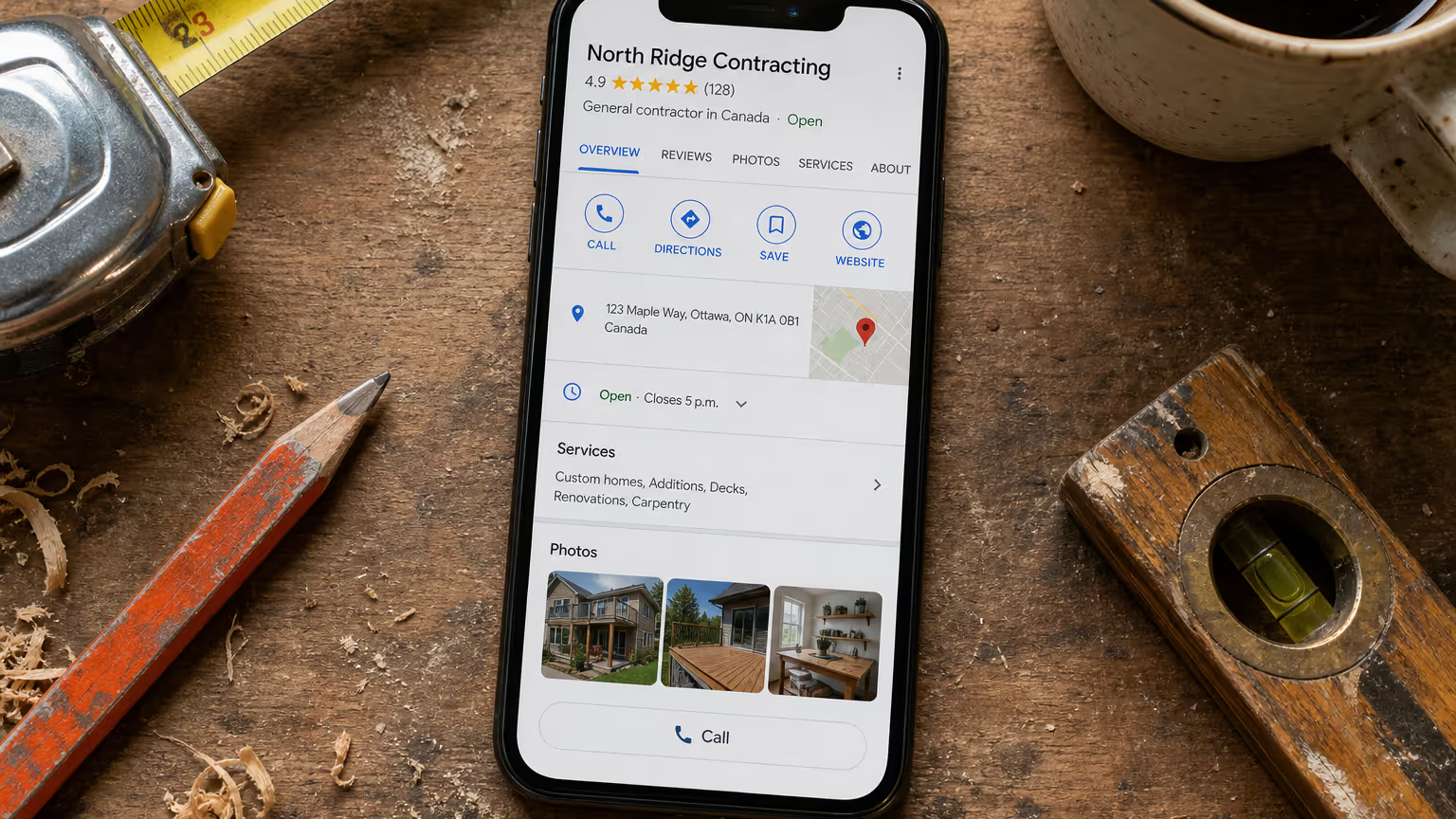
4. Your Google Business Profile Is Your Second Front Door
Your Google Business Profile (formerly Google My Business) is the free listing that powers the map pack and most of your "near me" visibility. If your physical shop had a torn flag, peeling paint, and a hand-written "we're open" sign in the window, you wouldn't expect new customers to walk in.
Most Canadian contractor Google Business Profiles look exactly like that.
Here's what a real one looks like for a contractor in 2026.
4.1 Category, primary and secondary
Your primary category is the most important field on your profile. It should be the most specific match for your core business. "Roofing Contractor" not just "Contractor." "HVAC Contractor" not just "Service Establishment." Choose the most specific one and Google will rank you for tighter, more relevant searches.
Add secondary categories for everything else you actually do. A general contractor might add "Kitchen Remodeler," "Bathroom Remodeler," "Basement Contractor," and "Home Renovation Service" as secondaries.
4.2 Service area
If you go to your customers (most trades do), set a service area, not a storefront address. Pick real cities or postal-code regions. Don't say "all of Alberta" if you really only work within an hour of Lethbridge. Google penalizes inflated service areas.
4.3 Hours, holidays, photos
Real hours. Updated for stat holidays. At least 25 photos showing actual work, not stock images. Before-and-after shots. Truck and trailer photos. Team in uniform. A few interior shots of your shop. Geotagged where possible.
BrightLocal's research on Google Business Profiles has consistently found that profiles with far more photos outperform photo-thin profiles on the actions that matter: calls, direction requests, and website clicks. The gap is not small. If your competitor has ten photos and you have a hundred real ones, you have an edge before either of you spends a dollar on ads.
4.4 Services
Add every service you offer as a separate service entry with a description. "Furnace Installation, $4,500 to $8,500, includes removal of old unit and disposal." Pricing is optional, but ranges build trust. Each service entry is another chance to match a search.
4.5 Q&A and Google Posts
Most contractors leave the Q&A section empty. Don't. Seed it yourself with the five questions you get asked most often. "Do you offer financing?" "Are you licensed in Manitoba?" "How long does a standard kitchen reno take?" Answer them in detail. This is free real estate that competitors are ignoring.
Google Posts are short updates that show up on your profile and in some search results. Post one every week. New project. Seasonal reminder. Featured service. It signals to Google that the listing is actively maintained.
4.6 Reviews (more on this in §6)
Reviews on your GBP are the single biggest ranking factor for the map pack in most Canadian markets. We'll go deep on the review machine below, but know this: without active review collection, your GBP will not rank against competitors who are collecting them.

5. The Contractor Website That Closes Work (vs The One That Just Exists)
A contractor website does three jobs. Get found. Build trust. Make it easy to book.
Most contractor websites do one of those at best. Here's what each should look like in 2026.
5.1 Get found
We covered the SEO basics in section 3. The website-specific pieces:
- Speed under three seconds. Most contractor sites we audit load in 6 to 11 seconds. That's half of all mobile visitors gone before the page even renders. Google PageSpeed Insights is free. Test your site. If it's not green, fix it.
- Mobile-first. More than 60% of contractor searches in Canada now happen on mobile. If your site needs zoom-pinching on a phone, you're done.
- Real photos. Stock photos of generic toolboxes scream "I don't take this seriously." Real photos of your team, your trucks, your finished work, your shop. Even iPhone shots from a real job site beat stock photography.
5.2 Build trust
- An About page that actually says who you are. Years in business. Number of employees. Cities served. Insurance and licensing. WSIB or WCB number. Membership in a trade association. A photo of the actual owner. Not stock-photo handshakes.
- Real reviews on the page. Pull them from Google. Embed them with a Google Reviews widget. Don't write fake ones. Customers can spot them in seconds.
- Case studies or project galleries with real numbers. Before and after. Square footage. Timeline. What got done. What it cost (a range is fine if you can't share exact). Three real case studies will outperform a hundred bullet points of "Quality work. Honest pricing. Free quotes." every time.
5.3 Make it easy to book
- Phone number in the top corner, click-to-call. On mobile, tapping it should dial. Sounds obvious. Half of contractor sites bury the phone number in the footer or use an image of the number that can't be tapped.
- A quote form that doesn't ask for the customer's life story. Name, phone, what kind of work, when. That's it. The longer your form, the lower your conversion.
- A callback widget or after-hours form for the 7pm searches. A homeowner whose furnace went out at 7:43pm is going to call the first contractor who responds in the morning. Capture that lead overnight or you lose it.
- Clear pricing or pricing ranges where possible. "Quotes are project-specific" is fine for a custom GC. For a service contractor, ballpark ranges build trust. "Standard furnace replacement: $4,500 to $8,500" tells a homeowner you're not going to play games.
5.4 The AI factor in 2026
AI tools have made building a decent-looking website cheaper than ever. That's good. That's not a threat. The threat is that contractors are buying $200 AI-generated sites that look fine on the surface but have no SEO foundation, no real content, and no schema. They look like websites. They don't act like them.
A real website built for a contractor isn't a pretty front page. It's a structured set of pages that match how Google indexes the trades, written for the specific kinds of customers in the specific cities the contractor serves. That part still requires a human who understands both your business and how Canadian local search works.
AI can build you the frame. Strategy, SEO, and content are still what makes Google rank you. Our website planning guide walks through the structural side in more detail.
6. Reviews Are Not Optional Anymore
BrightLocal's Local Consumer Review Survey puts the share of consumers who read reviews for local businesses at around 97%, and a large chunk of them read reviews every single time they go looking for one. For Canadian contractors specifically, the bar is even higher. The work is expensive, customers are nervous, and a stranger's review is the cheapest insurance they can get.
The good news: Canadian contractors who run a real review system collect 5 to 20 new reviews a month. The bad news: most contractors collect 0 to 2.
6.1 The review channels that matter for Canadian contractors
In rough order of impact:
- Google reviews. The biggest factor in local search rankings. Every customer should be asked for one.
- HomeStars reviews. Most relevant for renovators, home builders, and finished-product trades (kitchens, bathrooms, roofing). Less critical for emergency services.
- BBB rating. Mostly important for higher-ticket trades where customers are doing background research before signing a contract.
- Facebook reviews. Useful for trades with strong local-community visibility (landscapers, painters).
- Trade-specific platforms. Houzz for renovators and designers. Master Builders' Association directories. Provincial trade body directories.
Don't try to play on all five at once. Start with Google. Get to 50 Google reviews before you focus on anything else.
6.2 The review collection system
This is the part most contractors skip. They "remember to ask" and then forget. A real review collection system looks like this:
- Pick the moment. The best moment to ask for a review is right after job completion, while the customer is happy and the work is visible. Not three weeks later when their water heater started making a noise again.
- Ask in person. "I'm so glad you're happy with the work. Reviews on Google really help small businesses like ours. Would you be willing to write a quick one? I can text you the link right now."
- Send the link immediately. Have your Google review link saved as a text shortcut on your phone. Send it while you're standing there.
- Follow up by email 24 hours later if they didn't post. Polite. Short. Direct link.
- Track who you asked and who posted. A simple spreadsheet works. Or use a tool like Birdeye, NiceJob, or Podium that automates this. Pick what you'll actually use. If you'd rather not bolt on another SaaS, our automation and AI integration service ties review prompts into your existing CRM or scheduling tool.
Roofing and reno clients we've worked with across Alberta and Ontario have seen review counts more than quadruple in under a year running this kind of structured system, with map-pack rankings improving within roughly four months and direct phone calls from search climbing right alongside.
6.3 What to do with bad reviews
Every contractor gets one eventually. The wrong way to handle it is to argue with the customer in public. The right way:
- Respond within 48 hours
- Stay calm, professional, factual
- Acknowledge what you can acknowledge
- Offer to take it offline ("Please reach me directly at [phone or email]")
- Don't grovel and don't escalate
Future customers reading your reviews will judge you more on how you respond to a bad review than on the bad review itself. A measured, professional response to a critical review actually builds trust.

7. Google Local Services Ads: The Cheapest Path to Leads If You Qualify
In Canada in 2026, Google Local Services Ads (LSAs) sit at the very top of the page when someone searches for a trade-related service. Above the regular Google Ads. Above the map pack. Above the organic results.
If you qualify and your competitors don't, LSAs are the single fastest channel to start getting leads.
7.1 Which trades qualify in Canada
As of 2026, eligible trade categories in Canada include:
- HVAC (heating, cooling, ventilation)
- Plumbing
- Electrical
- Roofing
- Locksmith
- Garage Door
- Pest Control
- Cleaning Services
- Landscaping
- General Contracting
- Carpet Cleaning
- Tree Services
- Water Damage Restoration
- Window Cleaning and Repair
- Junk Removal
- Appliance Repair
- Lawn Care
- Snow Removal
- Pool Services
Availability varies by city, and Google adds categories quietly throughout the year. Check Google's LSA signup page to confirm your trade and location.
7.2 What you need to qualify
The Google Guaranteed badge requires:
- Business verification. Proof of business registration in Canada.
- General liability insurance. Valid policy, usually a minimum of $1 million coverage. The Google Guaranteed badge provides up to $2,000 CAD coverage to consumers if work is unsatisfactory, which builds trust but also means Google wants confirmation you're insured.
- Provincial trade licenses. TSSA for HVAC in Ontario, gasfitter certification for plumbing, ECRA for electrical in Ontario, similar requirements in other provinces.
- Background check on the business owner. Processed through a third-party provider Google uses.
- Reviews. Most categories require a minimum number of Google reviews before going live. This is where a working review system pays off.
The application process takes 2 to 4 weeks. Start it now if you qualify, before your competitors do.
7.3 What LSAs cost in Canada
Pay per lead, not per click. Typical costs by trade:
- Plumbing: $20 to $40 per lead
- Electrical: $20 to $35 per lead
- HVAC: $30 to $60 per lead
- Roofing: $50 to $100 per lead
- Renovation and GC: $40 to $80 per lead
A "lead" means a real customer reaching out (call or message), not a click. You can dispute leads that are spam, wrong service, or outside your service area, and Google credits your account.
Compare that to HomeStars in the GTA at $30 to $70 per shared lead, where three to five contractors get the same lead, and the math is obvious. An LSA lead is exclusive.
7.4 How to win with LSAs
- Respond within 5 minutes. Google tracks response time and uses it as a ranking factor inside LSAs. Faster responders get shown more.
- Get every legitimate lead to leave a review. Reviews on your Google Business Profile flow through to LSAs and improve your ranking inside the LSA box too.
- Start with a $500 to $1,000 monthly budget. Track cost per lead and close rate for 60 days, then scale what works.
- Dispute aggressively. Don't pay for spam leads. Don't pay for wrong-service leads. Submit disputes within the window and Google credits the real ones.
If you're in a trade that qualifies, the question isn't "should I run LSAs." The question is "how quickly can I qualify."
8. Paid Ads Beyond LSAs: Google Search and Meta
LSAs cover trade services. They don't cover everything. And in some trades or some cities, LSAs aren't available yet. That's where regular Google Search Ads and Meta (Facebook and Instagram) come in.
8.1 Google Search Ads
When LSAs aren't available, or for higher-ticket services where you want to capture demand below the LSA box, Google Search Ads work. The rules are different from LSAs:
- Pay per click, not per lead. A click costs $3 to $25 depending on trade and city.
- You need a landing page that converts. Not your homepage. A page specifically about the service the customer searched for, with a clear form and trust signals.
- Keyword selection matters. "Roof repair Calgary" is a buying keyword. "How does a metal roof work" is a research keyword. Bid on buying keywords. Don't waste budget on research ones unless you're doing top-of-funnel content marketing (Stage 3 stuff).
- Use negative keywords. "Free," "DIY," "jobs," "salary," "career" should all be added as negatives for most trades. They burn money on people who aren't customers.
A reasonable starting budget for a service-based contractor in a mid-sized Canadian city: $1,000 to $2,500 per month, focused on three to five buying-intent keywords with tightly written ads pointing at dedicated landing pages. This is the core of how we structure our lead generation campaigns for trades clients.
8.2 Meta Ads (Facebook + Instagram)
Meta isn't for capturing search demand. It's for creating awareness, retargeting people who already visited your website, and showing finished work to homeowners in your area.
Where Meta works for contractors:
- Renovation contractors. Stunning before-and-after photos work great in feed and stories. Homeowners scroll, see your work, save the post, call later.
- Custom home builders. Reels showing a build over time. Project tours. Drone footage.
- Roofers, fencers, landscapers. Anything with a visible visual transformation.
Where Meta doesn't work as well:
- Emergency services. People searching "burst pipe" aren't on Facebook. They're on Google.
- B2B trades. Industrial plumbing, commercial electrical. Wrong audience.
If you do run Meta, run two things only at the start:
- A retargeting campaign showing your best work to anyone who visited your website in the last 30 days. Budget: $100 to $300/month. ROI is consistently the highest of any Meta campaign.
- A geo-targeted brand awareness campaign to homeowners in your service area, with strong before-and-after photos and one clear CTA. Budget: $300 to $800/month to start.
Don't run boost campaigns. Boosting a post is the worst use of Meta budget. Use the actual Ads Manager with proper campaign structure.
9. Lead-Gen Platforms: When to Use, When to Walk
Lead-selling platforms have a place in some contractor marketing mixes. They aren't a replacement for the foundation. They're a supplement at best, and a tax at worst.
9.1 HomeStars
HomeStars is owned by Angi (the US lead-gen giant) and is the biggest home services marketplace in Canada. Free basic listing. Paid tiers run roughly $100 to $200 per month depending on trade and region. Pay-per-lead in some categories on top of that.
When HomeStars is worth it:
- Renovation contractors in major Canadian markets (GTA, Vancouver, Calgary, Edmonton, Ottawa, Montreal). The volume of homeowner searches on the platform is real.
- As a review collection channel. Even if you don't pay for lead delivery, HomeStars reviews build trust and help with local search visibility.
When HomeStars isn't:
- Smaller markets. The volume isn't there.
- Trades with low average ticket size. $30 to $70 per shared lead on a $200 service call doesn't pencil out.
- Emergency services. Customers calling in a panic don't go to HomeStars. They go to Google.
The hidden cost: every HomeStars lead is shared with three to five other contractors. You're paying to compete on price.
9.2 Houzz Pro
Houzz Pro offers a free Canadian business profile and paid project management software with localized features for Canadian taxes and online payments.
Best for:
- Interior designers, custom home builders, renovators. Their audience skews higher-budget and visually motivated.
- Contractors who already do strong photography. A weak portfolio on Houzz hurts more than no portfolio.
The Houzz Pro software (paid tier) is a separate consideration from the directory listing. It can be a useful tool. The directory listing alone is free and worth claiming.
9.3 Bark, Thumbtack, TaskRabbit, and the rest
Most of these (including Bark, Thumbtack, and TaskRabbit) are aggressively shared-lead models. They sell the same lead to many contractors. Margins suffer. Quality is often poor. We've seen contractors burn $3,000 in a quarter on Bark with single-digit jobs to show for it.
Our general guidance: skip them unless a specific peer in your trade and city tells you they're working right now in that specific market. If you do try them, set a hard monthly cap and review results at 30 days, not 90.

10. Content and SEO: Ranking for Your Trade in Your City
Content marketing for contractors gets oversold. You don't need to be a blogger. You don't need to post on TikTok. You don't need a newsletter.
What you do need is a small library of pages on your website that match how Canadian homeowners actually search.
10.1 The 5 page types every contractor website should have
- Service pages (one per major service)
- Service-area pages (one per major city or region you serve)
- Case study pages (3 to 10 real projects, with photos and numbers)
- FAQ or resource pages (answers to the questions you get asked every week)
- An About page that builds trust
That's your foundation. With those five types of pages built right, you'll outrank 80% of competitors in most Canadian markets, because most contractors don't have them.
10.2 The "[trade] + [city]" keyword strategy
Every Canadian contractor should map out the 20 to 50 most valuable search terms for their trade and service area. For a Calgary plumber, those might include:
- "plumber Calgary"
- "emergency plumber Calgary"
- "drain cleaning Calgary"
- "water heater installation Calgary"
- "plumbing inspection Calgary"
- "burst pipe repair Calgary"
- "plumber Airdrie"
- "plumber Cochrane"
- "plumber Okotoks"
Each one is a page or a section of a page on your website. Each one is also a possible Google Ads keyword. Each one is also a service entry on your GBP. Same target, three channels feeding it.
For research, free tools like Google's autocomplete, the "People also ask" boxes on the results page, and the "Related Searches" at the bottom of the page give you a starting list at no cost. Paid tools like Ahrefs, SEMrush, or DataForSEO give you exact volumes.
10.3 Local content that builds authority
Beyond the standard service and area pages, the contractors winning at SEO in Canada are publishing genuinely useful local content:
- "How Much Does a Bathroom Renovation Cost in Toronto?" with real ranges based on actual completed projects.
- "What Permits Do You Need for a Deck in Edmonton?" with links to the city permit office and a clear walk-through.
- "Why Heat Pumps Make Sense in Halifax's Climate" written by someone who actually installs them in Halifax.
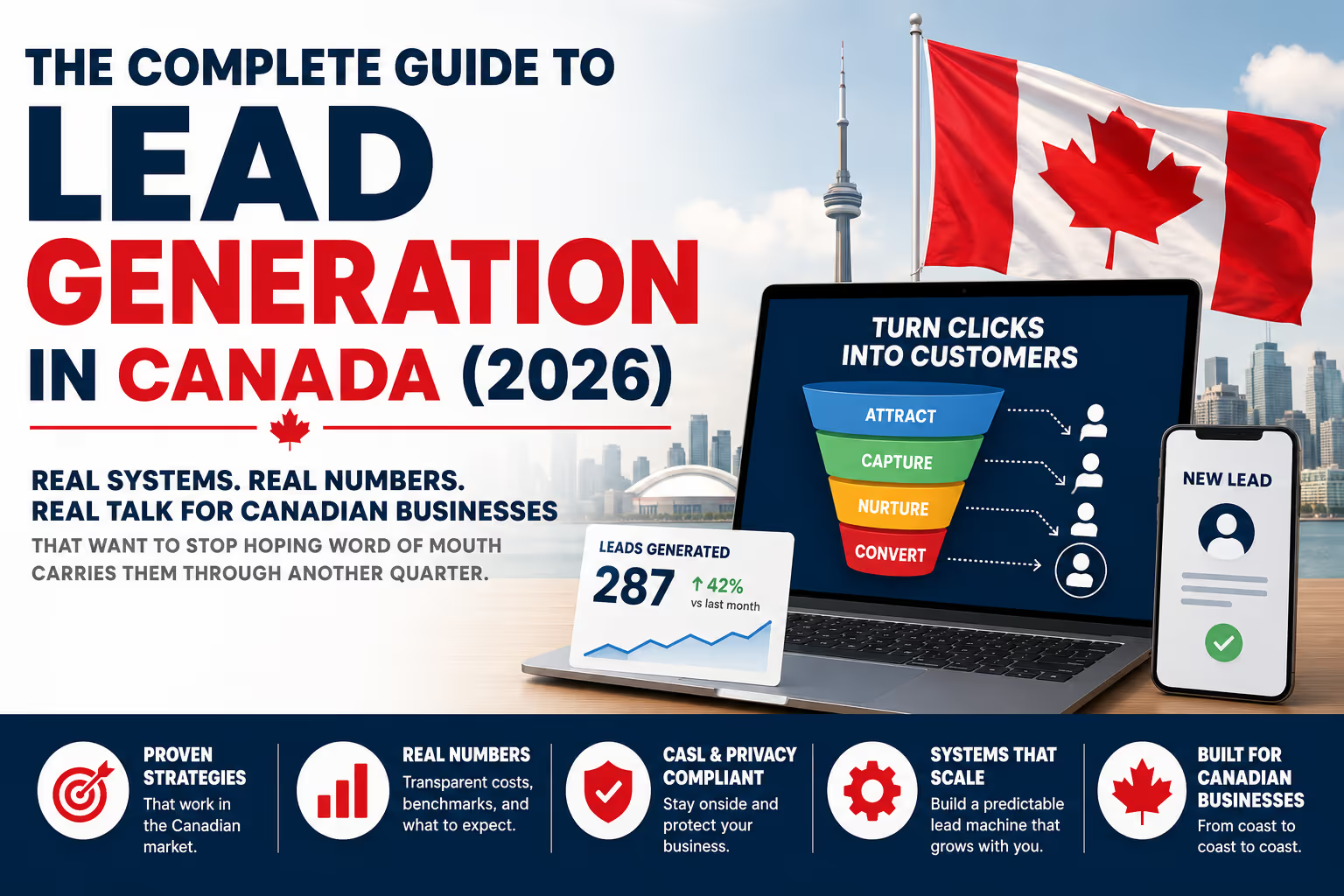
Two of these per quarter, written by you (or interviewed and ghostwritten by a real writer who knows your trade), is more SEO value than a hundred AI-generated generic blog posts. For a deeper walk-through of how we approach this end to end, paid and organic together, see our complete guide to lead generation in Canada.
11. Email and Text Follow-Up the CASL-Compliant Way
Canada has some of the strictest anti-spam laws in the world. The Canadian Anti-Spam Legislation (CASL) governs every commercial electronic message you send, including email, SMS, and direct messages on social platforms. The federal government also publishes a plain-English CASL overview for businesses. Get it wrong and the penalties run up to $10 million per violation for businesses.
That sounds scary. The actual compliance is straightforward.
11.1 The 3 CASL requirements
Every commercial electronic message you send needs three things:
- Consent. Either express (the person actively said yes) or implied (you have an existing business relationship within the last 24 months, or they made an inquiry within the last 6 months).
- Identification. Your business name and contact info clearly visible in the message.
- An unsubscribe mechanism. A working link or instruction that lets them opt out, processed within 10 business days.
11.2 Implied consent for contractors
For a contractor, "implied consent" is broader than most people realize. You have implied consent to email a customer who:
- Hired you for work in the last 24 months (existing business relationship)
- Asked you for a quote in the last 6 months (existing inquiry relationship)
- Was referred to you in the right circumstances (with limits, and only one message)
That covers most of your follow-up activity. Reaching out to past customers about a seasonal service ("your furnace tune-up is due"), to recent quote requests ("checking back on that bathroom reno estimate"), or sending a holiday update is fine under implied consent, as long as you also include the identification and unsubscribe.
11.3 What you should actually be sending
Most Canadian contractors send nothing. That's a massive miss. The follow-up sequences that pay off:
- Quote follow-up sequence. Three messages over 14 days to anyone who got a quote and didn't book.
- Seasonal reminder series. Furnace tune-up reminders in September. AC tune-ups in April. Gutter cleaning in October. Sent to past customers under implied consent.
- Project anniversary check-in. "It's been a year since we did your bathroom. Everything still working? Want a free check-up?" Sent at 12 months and 24 months. Reactivates customers and builds review opportunities.
- Referral request series. A clean ask, sent once a quarter, with an actual incentive ("$100 off your next service for any referral that books a job").
Tools that handle CASL correctly out of the box: Mailchimp, ConvertKit, ActiveCampaign, Brevo. They build in the unsubscribe mechanism and identification automatically. You just have to manage your consent.
For SMS, the same rules apply. Tools like Textline, SimpleTexting, and Twilio handle compliance. Don't text customers from your personal phone for marketing.
11.4 What not to do
- Don't buy email lists. CASL requires consent from the person whose email you're using. Bought lists almost never qualify.
- Don't scrape email addresses off the internet and add them to your sequences.
- Don't add someone to your list because they handed you a business card. A business card exchange isn't express consent on its own.
- Don't send "one last email" to people who unsubscribed. That counts as a violation.
12. Marketing by Trade
The general playbook above applies to every trade. The emphasis shifts based on what you do. Here's the short version for the most common Canadian contractor categories.
12.1 Roofing contractors
Highest leverage: Local SEO, LSAs, Google Search Ads, before-and-after photo galleries.
Why: Roofing is a high-ticket emergency service. Most customers search Google. Most are nervous about the spend. Reviews and visible work history close the gap.
Common mistake: Spending on Meta brand awareness before the Google foundation is in. Roofing customers are searching, not scrolling.
12.2 Electrical contractors
Highest leverage: LSAs (where available), GBP optimization, emergency-call landing pages.
Why: "Emergency electrician" searches are some of the highest-intent searches in Canada. Capture them with LSAs and dedicated landing pages.
Common mistake: Letting the residential side and commercial side blur on the same website. Build separate pages or even separate sites for commercial.
12.3 Plumbing contractors
Highest leverage: LSAs, GBP, fast-loading mobile site with a click-to-call number.
Why: A plumbing emergency means the homeowner calls the first three businesses they find on Google. If you're not in those first three, or your page takes 8 seconds to load, you don't get the call.
Common mistake: Underinvesting in review collection. In a tied search ranking, reviews break the tie.
12.4 HVAC contractors
Highest leverage: LSAs, seasonal Google Search campaigns, email reminder sequences to past customers.
Why: HVAC is half emergency, half scheduled. The scheduled side (tune-ups, replacements before failure) is where smart contractors make repeat revenue. Email sequences nudge past customers into seasonal work.
Common mistake: Treating every HVAC customer like a one-off transaction. The same customer needs a furnace tune-up annually, an AC tune-up annually, and a full system replacement every 15 years. Lifetime value is high if you stay in touch.
12.5 General contractors and renovators
Highest leverage: Case studies with real photos and numbers, HomeStars (in major markets), Houzz Pro, Meta retargeting with portfolio reels.
Why: Renovation is a long-consideration purchase. Customers research for weeks. Your portfolio and reviews do the work between first visit and signed contract.
Common mistake: Hiding pricing entirely. Custom GCs are right to avoid hard prices, but giving project ranges ("most kitchen renovations in our area range from $40,000 to $90,000") qualifies leads and saves your sales time.
12.6 Custom home builders
Highest leverage: Houzz Pro, Instagram and Meta, drone-photo case studies, local SEO for "custom home builder + city."
Why: Custom-build customers are visual, motivated, and have time to research. They need to fall in love with your work before they ever email you.
Common mistake: Skipping the website fundamentals because the work is "all on Instagram." Instagram is a portfolio. Google is the discovery engine. You need both.
12.7 Landscapers, snow removal, lawn care
Highest leverage: Seasonal GBP posts, local SEO for "[service] + city," Meta retargeting, neighbourhood door-hangers (still works).
Why: Residential routes work on geographic density. Door hangers in a target neighbourhood plus a GBP profile that ranks for that neighbourhood is a brutally efficient combo.
Common mistake: Treating spring and fall like the only seasons. Snow removal contracts in October. Spring cleanup bookings in February. The sales cycle starts long before the season.
12.8 Painters, drywall, finish carpenters
Highest leverage: Photo-heavy website, Google reviews, HomeStars in major markets, referral programs from contractors who sub them in.
Why: Finish trades live and die on portfolio quality. The work is visual. Reviews and a clean portfolio close jobs faster than any ad campaign.
Common mistake: Trying to compete in lowest-bid markets. Position higher. Photo your best work. Charge accordingly. The market for "cheapest painter in town" is a losing race. Premium positioning starts with branding and visual identity, not with bigger discounts.
For more real-world examples across trades and industries, browse our case studies.
13. Marketing Budgets by Revenue Stage
The single most common contractor question we get: "How much should I be spending on marketing?"
Honest answer: it depends on your revenue, your stage (§2), and your trade. But here are the actual ranges we see working for Canadian contractors.
13.1 Under $250k annual revenue
Total marketing budget: 4 to 8% of revenue, or roughly $10k to $20k/year.
Where it goes:
- 50% on your digital foundation (website rebuild or upgrade, GBP optimization, review system setup). Front-loaded in the first 6 months.
- 30% on Google LSAs or Google Search Ads if you qualify
- 20% on tools and ongoing maintenance (hosting, review software, basic SEO updates)
Don't bother with: A blog. A social media manager. A "brand refresh." Get the foundation in.
13.2 $250k to $750k annual revenue
Total marketing budget: 5 to 10% of revenue, or $15k to $75k/year.
Where it goes:
- 20% on website and SEO maintenance
- 40% on paid ads (LSAs plus Google Search)
- 20% on review and referral systems
- 10% on email and SMS follow-up tools and content
- 10% on a part-time marketing person or fractional agency relationship
You can start to: Run modest Meta retargeting. Publish two pieces of local content per quarter. Send seasonal email campaigns.
13.3 $750k to $2M annual revenue
Total marketing budget: 6 to 12% of revenue, or $45k to $240k/year.
Where it goes:
- 15% on website and SEO (now with real content investment)
- 40% on paid ads (LSAs plus Search plus Meta retargeting plus maybe display)
- 15% on review and referral systems with paid software
- 10% on email and SMS plus a real content pipeline
- 20% on a dedicated marketing person (full-time or fractional agency)
Now is when: Content marketing (Stage 3) starts to make sense. Brand awareness ads. Sponsorships in your service area. A proper marketing dashboard.
13.4 Over $2M annual revenue
Total marketing budget: 5 to 10% of revenue, scaling with growth goals.
Where it goes:
- Custom mix. At this stage you need a real marketing strategy built around growth targets, not a percentage rule. Hire (or outsource) a marketing director who can build the plan.
13.5 The percentage isn't sacred
These are starting points. Stage 1 contractors should front-load the first 12 months to get the foundation in (you might spend 10% of revenue in year one, then drop to 5%). Stage 3 contractors with strong organic might spend less than 5% of revenue and still grow. Use the percentages as guardrails, not gospel.
The bigger principle: every marketing dollar should map to a measurable outcome. Leads. Booked jobs. Reviews collected. Email subscribers. If a vendor can't tell you what their work is producing in numbers, that's not marketing. That's spending. For how we package the foundation, paid, and content layers together for trades clients, see our signature marketing system and pricing.
14. The Provincial Stuff: AODA, Bill 96, Licensing
Canada doesn't have one set of rules for marketing or running a contractor business. It has thirteen. The pieces that actually matter for your marketing:
14.1 AODA (Ontario)
The Accessibility for Ontarians with Disabilities Act (AODA) requires that organizations with 50 or more employees make their public-facing websites and web content conform to WCAG 2.0 AA accessibility standards. Businesses with 20 or more employees must also file an accessibility compliance report with the Government of Ontario. The next reporting deadline is December 31, 2026, and reports are filed every three years.
For most independent Canadian contractors, you're under 20 employees and the formal reporting doesn't apply. But the accessibility standards themselves are still a good idea. Many of your customers are older homeowners. An accessible site loads better, ranks better, and reads better.
Bottom line: if you're an Ontario contractor with 20+ employees, get your site WCAG-compliant and file your report before the December 31, 2026 deadline. If you're smaller, treat the standards as a quality bar to aim for, not a legal obligation.
14.2 Bill 96 / Charter of the French Language (Quebec)
If you do business in Quebec, your public-facing marketing (including your website) needs to be in French. French must be "markedly predominant" in any bilingual content (font size, position, prominence).
As of June 1, 2025, registered trademarks that contain generic or descriptive terms in another language must also display those terms in French on products and signage. Practical implication: a contractor with an English-language business name and slogan needs to add French equivalents in product descriptions, service descriptions, and signage to comply.
If you serve Quebec, this isn't optional. The OQLF (Office québécois de la langue française) actively enforces the Charter of the French Language. Fines start at $3,000 for a business and scale up for repeat offences.
A few practical tips:
- Build a French version of your website. Not auto-translate. Hire a real translator.
- All advertising in Quebec must be in French (or French plus another language, with French markedly predominant).
- Customer-facing forms, quotes, and contracts: French-first.
If you serve only English-speaking parts of Canada, this section doesn't apply to you.
14.3 Provincial trade licensing
Beyond marketing, your business has to be properly licensed in every province you operate in. This affects your marketing because:
- Google LSAs (§7) require provincial licensing verification.
- Insurance providers and bonding companies may require it.
- BBB accreditation and most provincial trade association memberships require it.
If you're in a trade that requires licensing (electrical, plumbing, gas, certain HVAC, often roofing in some provinces), your marketing materials should display your license number prominently. It builds trust and signals legitimacy.

15. Real Example: Jake's Welding by the Numbers
We've been building out the marketing system for Jake's Welding, an Ontario fabrication shop based in Oxford County (the dairy capital of Canada), since the rebuild went live. Their flagship product is the Model 600 hoof trimming chute, sold to dairy farmers, veterinarians, and professional hoof trimmers across Canada. Here's the rough state of things, real numbers.
Starting point (before the rebuild):
- Website: dated, slow on mobile, no clear product page, no schema, weak quote-request flow
- Channel mix: tradeshows, referrals, existing relationships, almost nothing year-round from digital
- Lead tracking: none, so no way to tell which channel produced a quote
- Google Business Profile: largely incomplete, a handful of reviews
- Paid ads: none
12 months in:
- Website: rebuilt around the Model 600 chute, sub-2-second mobile load, product-focused service pages, schema markup on every page, clear quote-request pathways for serious buyers
- Google Business Profile: complete, real product photos, regular posts, growing review count
- Paid ads: Meta lead-generation campaigns targeting Canadian dairy farmers and ag operators, with product-focused creative routing inquiries directly to Jake's
- Lead sources: roughly 600 inbound leads tracked, at approximately $30 per lead blended cost, contributing to multiple chute sales and conversations with larger distributors
The blended cost-per-lead of around $30 is sitting well below what shared-lead platforms would have charged for the same volume, and the work that came in fed back into the system: photos for the website, reviews on Google, real-world content for product and use-case pages.
A few things worth calling out:
- The website rebuild was the unlock. Before that, every other piece of marketing was leaking. After it, every other piece compounded.
- Audience-specific creative beats generic ad copy. Speaking directly to dairy farmers and hoof trimmers, with farm-side language and real product imagery, dropped cost-per-lead and increased the percentage of leads that turned into real conversations.
- Paid ads went from "not worth it" to ROI-positive once the foundation was in. The same monthly ad spend that would have lost money before the rebuild now consistently produces qualified quote requests.
Read the full breakdown in the Jake's Welding case study. Different trade, same playbook: foundation first, then demand capture, then demand creation.
That's the playbook. The order matters. Foundation first. Demand capture second. Demand creation third.
16. Red Flags to Walk Away From
Most agencies pitching contractors in Canada aren't running this playbook. They're selling shortcuts. Here are the pitches to walk away from.
"We'll give you exclusive leads in your area"
If they're selling exclusive leads as a product, they're either reselling shared leads (read the fine print) or running their own lead-gen funnel and selling its output. In the second case, you're paying them for traffic and conversion work you should be doing on your own website. The leads stop the day you stop paying.
"Guaranteed first-page rankings"
No legitimate SEO consultant guarantees rankings. Google's algorithm doesn't allow it. Anyone who guarantees a #1 ranking is either lying or planning to game the search results in a way that will get you penalized.
"We work with all trades, anywhere in Canada"
Marketing for a roofer in Halifax and an HVAC contractor in Vancouver have almost nothing in common. An agency claiming to do both equally well at scale is almost certainly running the same template against every client. Look for specialists who know your trade or your province.
"Just sign this 12-month contract"
A real marketing partnership earns its renewal each month. Long lock-in contracts protect the agency, not the client. Look for month-to-month, or for project-based fees with clearly defined deliverables.
"We don't need access to your analytics"
If they're not measuring leads, they're not optimizing for leads. They're optimizing for something else (usually impressions or clicks or some other vanity number). Every marketing partner you work with should have read access to your Google Analytics, your Google Business Profile, and your ad accounts. If they don't want it, walk.
"The leads went to spam"
A newer one we've seen agencies use. They blame the homeowner's email provider for "leads not showing up." Real lead-gen reports show every form fill, every call tracked, every message sent, with timestamps. If the reporting is vague, the work probably is too.
17. FAQ
How long until contractor marketing actually works?
The foundation (website, GBP, reviews, on-page SEO) shows traction within 30 to 60 days for local search and 90 to 180 days for broader rankings. Paid ads (LSAs and Google Search) can produce leads within the first week if set up correctly. Anyone promising "leads in 48 hours" is usually running shared-lead schemes that don't last.
How much should a Canadian contractor spend on marketing?
4 to 10% of annual revenue, depending on growth goals and stage. See §13 for ranges. Front-load year one if you're rebuilding the foundation.
Should I run Google Ads or HomeStars first?
If your trade qualifies for Google Local Services Ads (LSAs), start there. The cost per real lead is lower and the leads are exclusive. HomeStars works as a supplement in major markets, not as a foundation.
Do I need to be on TikTok or Instagram?
Probably not. For most Canadian trades, your customers are on Google when they have a problem and on Facebook when they're scrolling at night. Instagram and TikTok make sense if you're a renovation or custom-build contractor with strong visual work to show. For everyone else, skip them and focus on Google.
How many Google reviews do I need to rank in the map pack?
Most Canadian markets become competitive at 25 to 50 reviews. Some major-city markets need 100+ to break into the map pack. The number matters less than the recency and the average rating. A profile with 30 fresh 5-star reviews outranks a profile with 200 reviews if half of them are old or under 4 stars.
Is SEO dead because of AI search?
No. Local search (the map pack) is largely unaffected by AI Overviews. People searching for a contractor still want a local business they can call and trust, and Google's local search hasn't changed structurally. AI search has reduced traffic to generic informational content, which doesn't affect most contractor websites.
Should I have a separate website for residential and commercial?
In most cases, yes. The customers, decision-makers, sales cycles, and buying triggers are completely different. Two separate sites, two GBPs (if you have two different brand identities), two separate ad accounts.
How do I track which marketing channel is producing leads?
Every form submission, every phone call, every chat session should be tracked. Free tools (Google Analytics 4 plus a call tracking number from CallRail or similar) give you 95% of what you need. If you can't tell which marketing channel produced a customer, you can't make smart decisions about which channel to invest in next.
What's the single biggest mistake Canadian contractors make with their marketing?
Buying tactics before they have a foundation. Spending money on ads, social media, or lead-gen platforms before their website loads in under three seconds, their GBP is complete, and their review system is running. The foundation isn't optional. It's the multiplier on everything else.
Want more? Our frequently asked questions page covers the rest of what we get asked most often.
Related Reading on NerdySpider
- The Complete Guide to Lead Generation in Canada (2026). Our full breakdown of how Canadian businesses build a working lead pipeline.
- Website Planning Guide. How to structure a contractor website that ranks and converts.
- Jake's Welding Case Study. The full story behind the numbers in §15.
- Signature Marketing System. What an end-to-end engagement with us looks like.
- Spider Bytes blog. More on marketing, websites, and growing trades businesses in Canada.
Want to Talk?
You've read the playbook. You probably have a sense of where your business sits on the Stage 1 / 2 / 3 ladder and what's missing.
If you want a second set of eyes on what to fix first (or whether the marketing you're already running is actually working), we'll do a free 30-minute walk-through of your website, your Google Business Profile, and your ad spend. No pitch deck. No "leverage synergies." Just real notes on what we'd do if it were our business.
Book a discovery call and we'll go from there. We work with contractors and trades across Canada, from southern Alberta out to Ontario and beyond. We know the difference between marketing that books jobs and marketing that just makes noise.
Talk soon!

.png)

.png)


.avif)